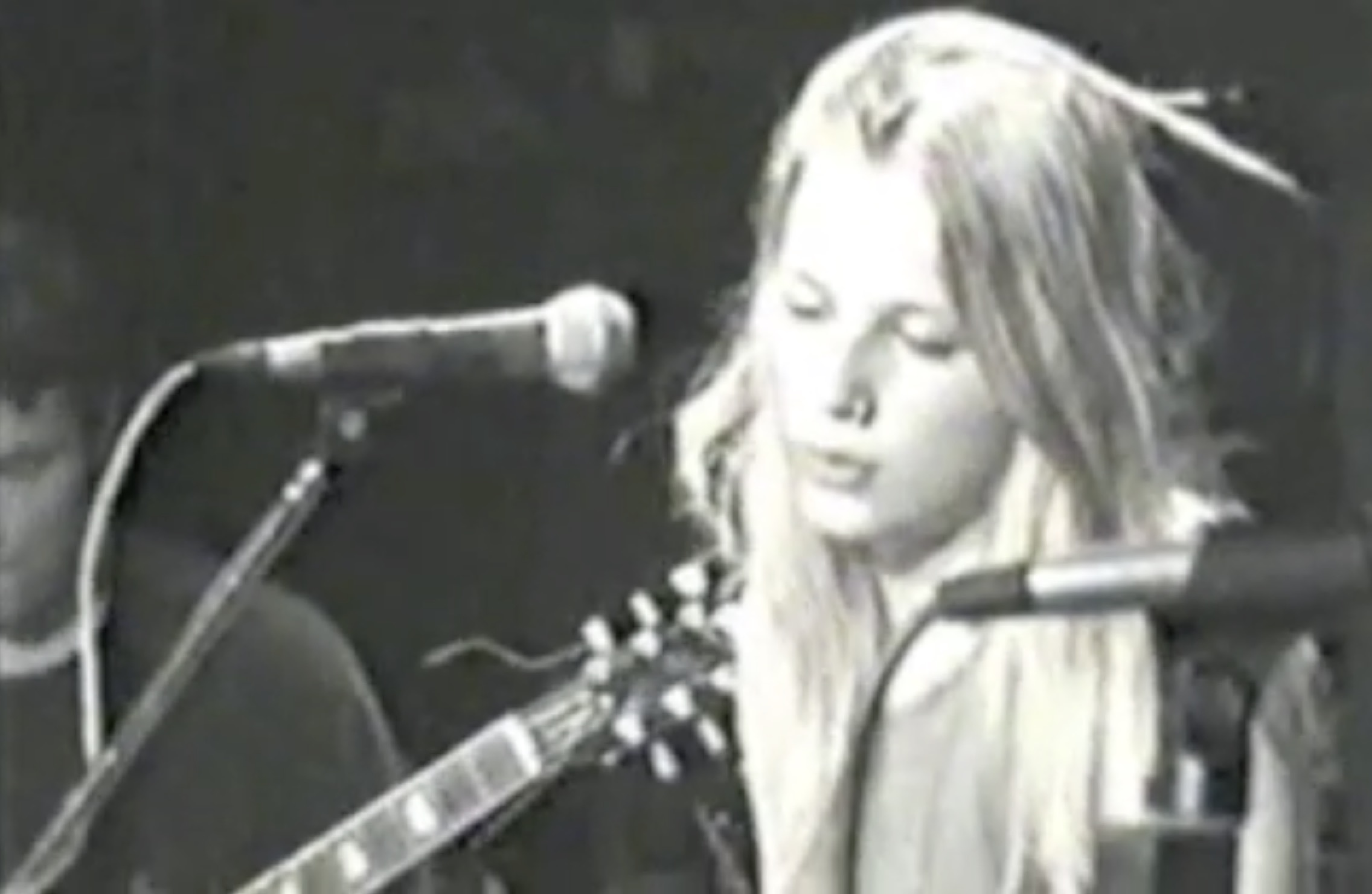
Have you ever played with a little kid? One young enough that they haven’t yet learned to be “reasonable”?
They see everything as new. They ask odd questions.
Their comments make us stop in our tracks and listen. Or laugh. Or cry.
Which is what good art does, too.
Ever been around a “child prodigy”?
Were they as wide eyed? Or did they present a carefully curated image, “composure”? Were they “mature for their age”, “self-aware”?
There is a trap in self awareness.
In being told you’re “gifted”, “special”. The act of refocusing one’s attention from the world to the person witnessing, to oneself as the lens through which reality streams in — and especially to oneself as the translator of that reality for others to experience — is the most difficult transition in an artist’s development. Or a child’s for that matter.
The moment one learns, for the first time, that the way they see the world changes the way others do, is the moment one learns power. Some will use that power to manipulate, to create realities that will later crumble under the weight of deception. Others will use it to help people out of the cages they made for themselves.
All people are storytellers. And all people know a good story when they experience it. We’re all artists and audiences, all the time.
When I was a child, I’d spontaneously sing. I learned English from records my parents played, and from subtitled TV shows we’d watch together. I could sing Harry Belafonte’s “Coconut Woman” and Roy Orbison’s “Blue Bayou” phonetically at age seven, even though I had no clue what I was singing about. And — crucially — I had no clue I was doing anything other seven year olds in Slovenia weren’t.
I’d be swinging from a tree in the yard at nine, belting out Whitney Houston’s “Greatest Love of All”, to the chagrin of any neighbors within earshot. Those poor souls. To this day, I am grateful for their kind tolerance of my “big voice”.
It felt amazing to sing, so sing I did. Sometimes I’d “fly at warp speed” down the street on my roller skates, singing “opera” — again, no clue what I was doing. It just felt amazing to make up fake Latin words and hit “impossible notes”.
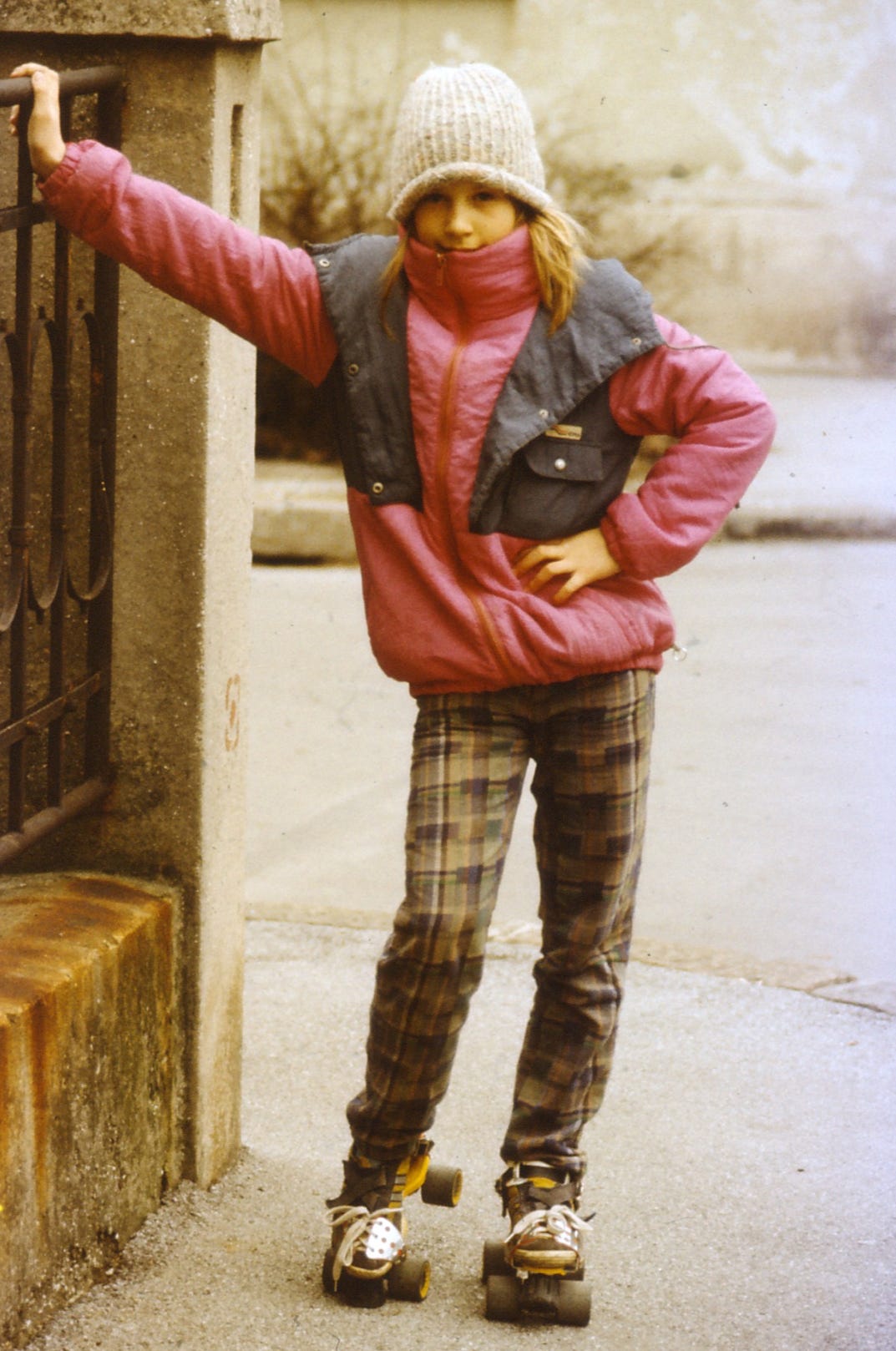
My parents were aware of the culture in our country. How “music kids” were started on their long journey towards “proficiency” at age 6. How most of them looked like all the kid joy had been sucked out of them. As my parents put it, they weren’t “allowed to be kids” any more. What my parents were probably not thinking about was the long colonial shadow that creates such education systems.
With my grown up perspective, I see the heavy hand of “the educated, civilizing savages” on those kids. The idea that in order to be a good artist — or citizen for that matter — you must relinquish your “wildness” and “tame your talent”.
They didn’t want to do that to me. So they said no when people offered to “school me”.
So, onward I went in my blissful oblivion. “Arting” as I did along the way.
I started writing songs and poetry when I was about eight.
Most of it in English — speaking of colonial shadow.
I had some guitar lessons, but not much emphasis on music theory. I could sort of “read” music, in the sense that I learned how to place fingers representing clusters of notes onto guitar frets, but I never got really good at it. I memorized more than read.
One bizarre day in primary school, we got this oddball substitute teacher. He was very tall, with ginger hair and beard. And a guitar. Not like the one I played, with nylon strings. But one with metal ones, wound. A bigger, more bulbous body.
An “American style” acoustic guitar.
Why did this teacher bring the guitar into class? It wasn’t a music class.
Turns out he couldn’t really speak Slovenian. How he even got the gig is a mystery to me to this day. But boy, cloud he play. Not like the Spanish guitar stuff I’d been learning, but like Led Zeppelin, whose music had just come across my radar then.
As the only kid who could speak English enough to communicate, I urgently asked if he could teach me how to play “Over the hills and far away”. He said, with a look of “fair warning” on his face, that he “didn’t know shit about theory”, but that — yes — he could teach me the song. I was sold.
By time I got into high school (in Slovenia that was age fourteen if memory serves), I was a decent acoustic guitar player. I could play some Pink Floyd songs, America’s “Ventura Highway”, Bob Marley’s “Redemption Song”, and — one of my favorites — Arlo Guthrie’s “Alice’s Restaurant”.
And I had started writing my own. It was weird stuff about being shot at dawn during revolutions, big storms with dark clouds — and lots of flying. Wings, always wings. And bombs. And sunsets. And tear drops dissolving in oceans.
So, one day I met this “street guy”. Being “homeless” wasn’t really a thing in our country then. What, with everyone getting healthcare and a decent social infrastructure, people didn’t really end up on the street much.
This guy was more like an international vagabond. He had run away from home someplace in Austria, and went traveling. He made his own shoes out of leather with a sewing awl. He played a mean guitar.
Or rather, it was sweet like honey. Golden toned and mellow. Like a sunset.
His voice soared. His green eyes always looked out into the distance, towards someplace he was headed.
I wasn’t too interested in sex at the time. Couldn’t care less yet, I was too young..
But the music. The music got me hard. To have someone who sounded like you, thought like you. He “didn’t know shit” either, yet could finger pick the Be-jeesus out of a song. He made up music on the spot, just like me. That. Got. Me.
I have no clue what he was thinking. He probably just wanted to “free me”. Maybe he saw how “wild” I still was. And how, despite my parents’ best efforts, the place I was at would never fit my “big voice”.
That my creative fire would probably be snuffed out there, sooner or later.
So, he offered to take me along on his travels. And I wanted to go.
Not for him. For the music. For that feeling of flying you get when you’re making a song on the spot. Weaving a new story, call and response, coming up with a hook that says with you forever.
That is as powerful as sex, if not more. Because, like sex, it is creation. But, unlike sex, an arena of people can share it without ill effect.
Two musicians become one body, one spirit. The thing they make together becomes alive, and puts fire back into eyes of audiences that had lost their spark. It makes people feel the world differently. It doesn’t matter what the song is about.
It’s the vibe — or rather, the spirit.
It moves people. Those who create as well as those who “consume”.
But, at the time, I couldn’t articulate any of this. All I knew was that I wanted to keep playing. So, when my parents said I couldn’t “go camping” with my street musician, I tried to “run away” with him.
I didn’t get very far, thankfully. My guitar hero moved on, and my parents grounded me for the summer. A bummer, but art-building gold in disguise.
I was stuck indoors for months. And what’s a girl to do alone with a guitar but to write more songs and get those guitar fingers flying?
So, by time I was allowed back outside, in September — a few days ahead of school start — what else could I do but take those tunes I had been writing all summer and became a street musician with them?
I didn’t put out a hat or my guitar case. I didn’t want to get paid.
I just wanted my new songs to be heard.
I needed that full spectrum of emotions I had been “locked up” with to be felt by my audience. I wanted them, too, to feel my urge to fly.
This was the first time I had busked. About an hour into my “performance” some boys my age stopped and listened. And they didn’t leave. They stood there the whole time, not talking, not reacting in any way, but just listened.
Who the hell does that at age fourteen?
After I stopped, they approached me. “You sound great,” one of them said. “Did you write all those songs?” I nodded yes. “Well, we already have two guitars, but we could use a singer… Do you want to be in our band?”
So — in the end — I got what I was looking for in spades, without running away. The band stayed together for a few years, wrote songs and even recorded. We ended up on TV once, too. We played shows. It was, in retrospect, totally awesome.
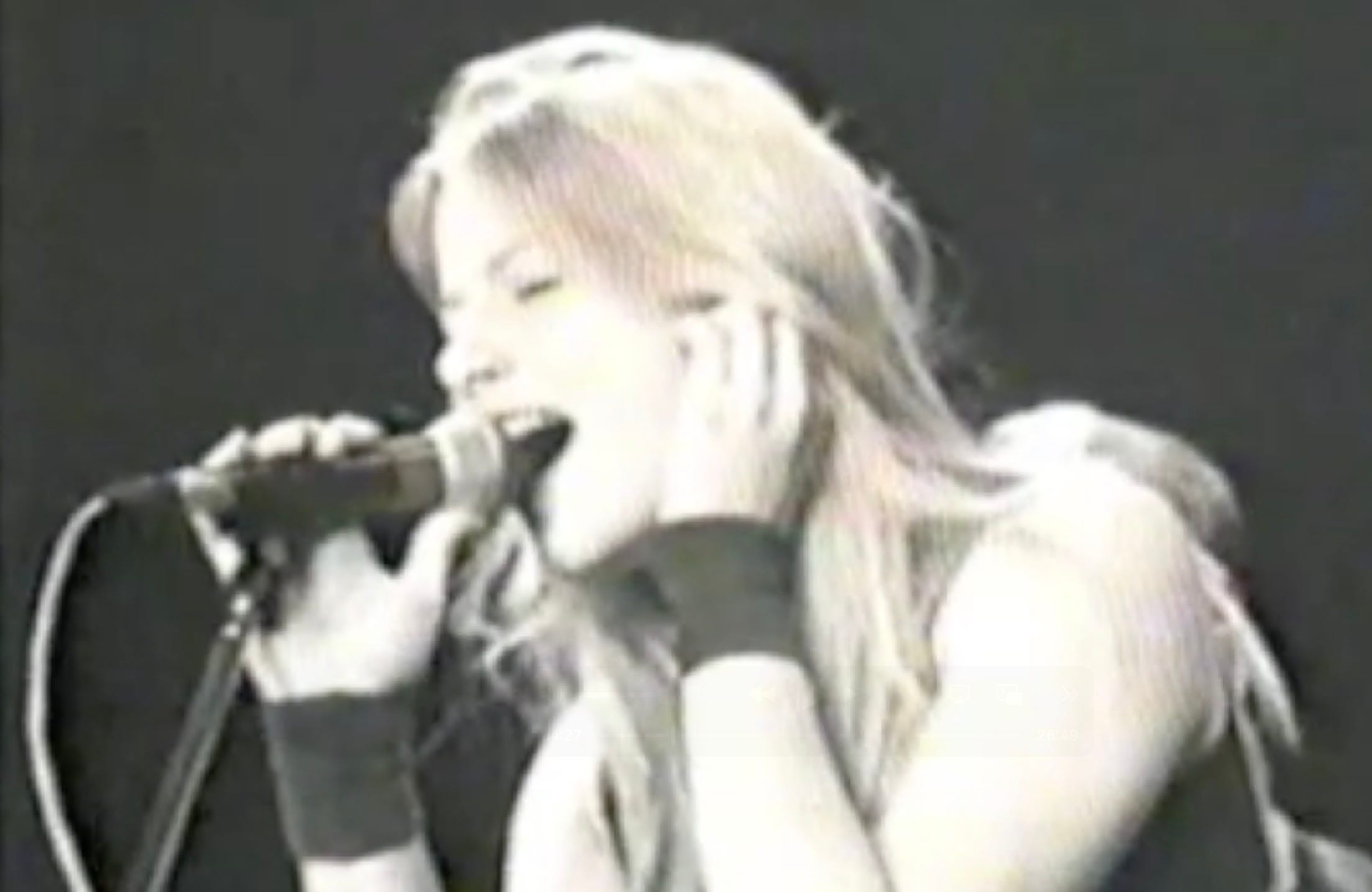
At the time, I was kind of oblivious — once again — to how unusual this was.
Doesn’t everyone’s life do this kind of thing?
If it hadn’t been for that wonky teacher with his performance of “Alice’s Restaurant” for a random class of ten year olds, the street musician with no perspective on what to do with a talented thirteen year old, and my incredible bandmates — I wouldn’t have ended up in the States.
Someone in the business of sending musicians to school heard those band recordings years later, and decided to help send me off to music college in New York City.
But — through this all — I didn’t learn how to be an artist. I always was one.
Even today, I am not sure about how “tame” I want my talent to be.
I have done my fair share of study since, and I truly enjoy honing my craft as a writer, storyteller, dancer, musician — whatever my endeavor.
But all that training is for only one purpose.
So that when it comes time to create, I am not thinking.
When that creative valve opens, I can “just do”.
Inspiration works best when I create from the place of not knowing. Of accepting whatever wants to “download” from the universe, through this ecstatic conduit that I am so fortunate to be in charge of keeping clear of detritus and baggage.
Because that contagious spark that all great art ignites — it doesn’t come from any one of us.
It belongs to all of us, equally. It exists to be shared.
We, artists, live to create for our audiences. To pass on the inspiration we receive from the universe on to other people. The art is ours, but the inspiration isn’t.
That spark comes from a place greater than us, flows out beyond the boundaries of our selves and — through our art — affects people in ways we can’t control.
It resonates differently in each person receiving. It changes people.
And by changing those people, it changes the world.
We, artists, are merely humble stewards of our mortal shells as conduits — as the living portals through which the eternal flame springs.