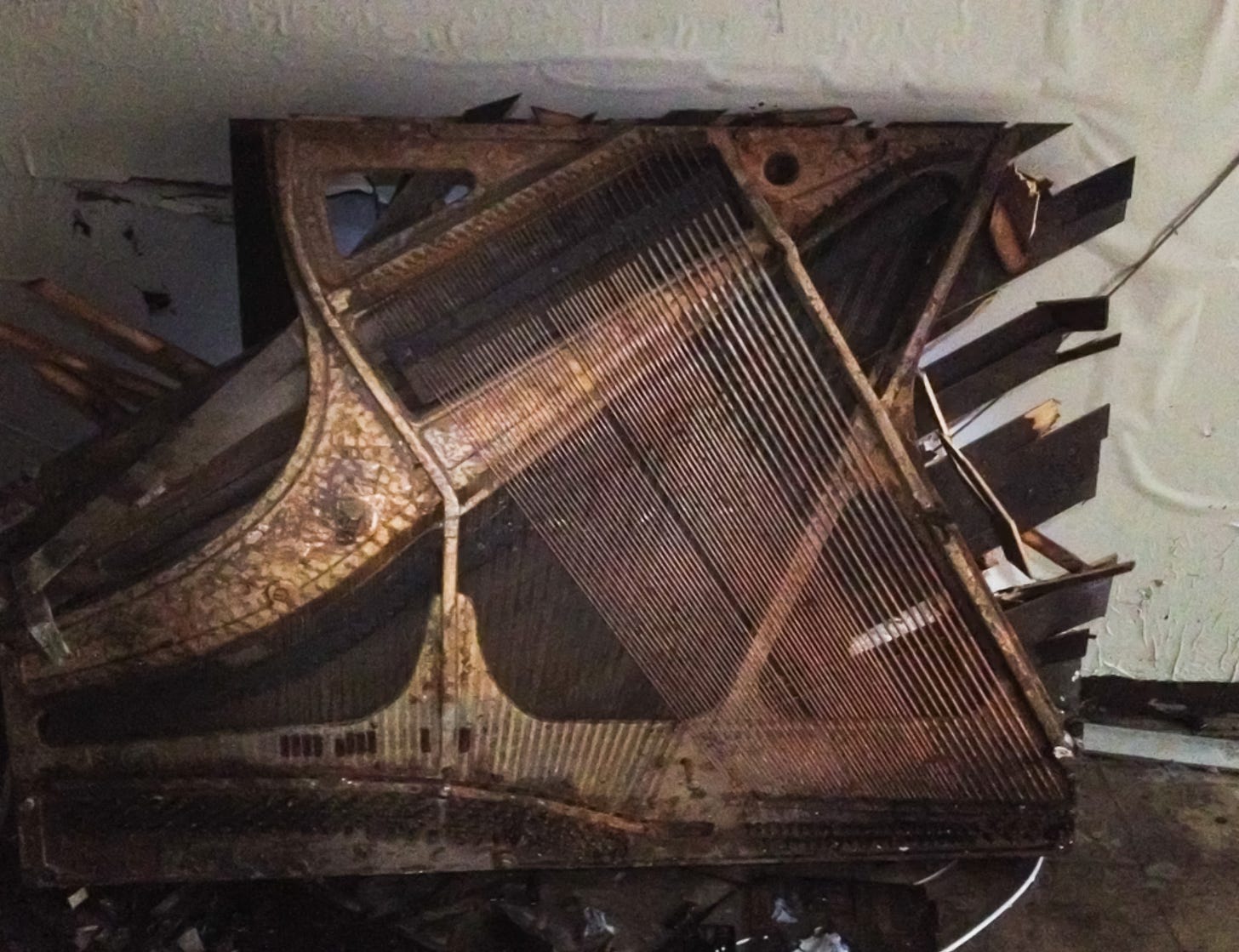
I was recently asked to explain why I am the only writer who can do justice to the story I’ve been working on for the past 10 years.
I’ve lived and breathed this project for long enough that its fictional world is as real to me as the one I can touch, so this question lands oddly in my psyche. I want to say: “I’m its creator. Who else could possibly do it justice?”
But my life story, too, has been with me for so long that I take its oddities and bizarre cosmic alignments for granted. These two things are related.
My film scripts deal with the death of our world and the birth of a new one, which is what surviving disaster is all about.
In real life, I’ve lived through a few. That alone may not qualify me as the best person to tell tales of life beyond disaster. But here’s what does.
I am the lucky bard.
I’ve survived many disasters and suffered enough that their emotional turmoil changed and shaped me, but not so much that my own pain would get in the way of ruthlessly honing the craft of storytelling.
This is the blessing and curse of the lucky bard. To witness fully, yet be sufficiently spared. A fortunate observer who survives to translate the disaster experience for those who would not suffer firsthand. To transfer the knowledge from those who have sacrificed in blood and flesh, to those who would learn through the emotional proxy of art — so the knowledge and passion of those who did not live to tell carries on.
The lucky bard is wounded enough to live for the story, yet healed enough to kill and reshape their creations until they hit like the real thing by means of art and artifice.
So — here are the life events that made me the lucky bard.
I was born a dreamer. My parents are children of survivors whose war trauma was passed down through generations like cold stones, undigested. Knowing how much carrying such baggage hurts, my mother and father wanted nothing more than for me to grow up oblivious of war and its long shadow over our lineage.
Imagining fantastic worlds was my full time job as a child. Because my parents’ wish was for me to grow up thinking of nothing but play and imaginative exploration.
They did an excellent job for as long as history let them. I spent my childhood playing in the woods and blue sea shorelines of former Yugoslavia, blissfully unaware of the looming political bigger picture.
But one summer, the Croatian islands burned.
We evacuated just in time.
Soon, war was upon us in our own hometown of Ljubljana.
I grew up in Slovenia, which was part of former Yugoslavia in my childhood. In 1991, the federation imploded, and Slovenia had a “10 day war” in which we secured our independence. War and regime change — even at their smoothest — take away an innocence you can never get back. At age twelve, I saw my pacifist father walk out of the house in a military uniform, rifle in hand. We — women and children — hid in the basement from airstrikes that, thankfully, never came. This early experience changed how I would relate to stability and the idea that a country can keep you safe.
I hope it doesn’t take each of us seeing tanks rolling down our streets for people to fathom that war — while it might serve as the last survival option — always comes with deep, insidious damage to all sides. Scars that linger through generations.
Slovenia wasn’t “war torn” in the 90s. We were “war adjacent”.
Our neighbors to the South endured genocide and years of protracted, brutal war.
Survivor’s guilt kept me blind to my own traumas from that point on. Because others around me, including my ancestors, always suffered so much worse than me.
But that early “primer” event also got me thinking. And writing. Looking for a better way to transfer knowledge than each of us touching the proverbial flame.
In 1998, I moved to the US to study at the Manhattan School of Music in New York City. In 2001, my last year of college, 9-11 happened. For a while, New York City was in shock. Everything ground to a halt. This event shattered any illusions I had about safety within a global military superpower. War could happen anywhere.
But I was — once again — doing well enough to observe and record, rather than drown in my own grief. While everyone around me suffered, I wrote. I thought.
I felt guilty for not being as shattered as they were. But the disruptions I had lived through up to that point had primed me as a survivor.
I recognized, in so many Americans around me, that same shock I had experienced in my early teens. A reality check on how quickly everything can be taken away.
And this time, I was lucid enough to notice how devastating that realization is on those who haven’t yet experienced war.
I wanted to find a better way to foster that awareness.
But it wasn’t until 11 years later that I got the wake up call that irrevocably shifted my perspective and set me on my current path.
When the disruptions are political, it’s easy to fool yourself that a better government can fix it. That the problem is local. That preventing another disaster is only a matter of political will. Better strategy. Better communication. Education.
Knowing your history. Voting. Organizing. Maybe moving to another land.
But on October 29th 2012 — in a matter of hours — Hurricane Sandy literally washed away the life I had worked so hard to build.
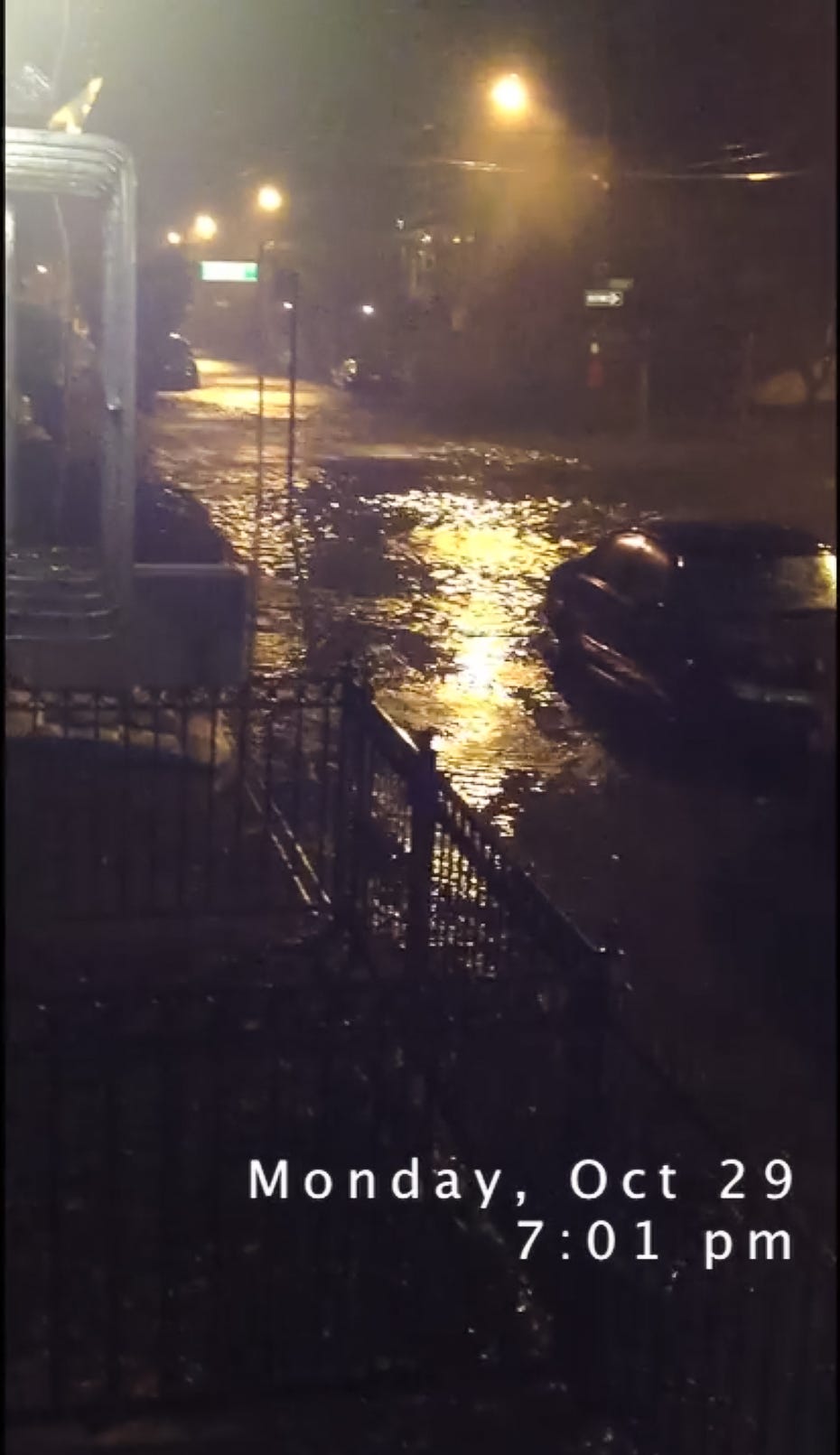
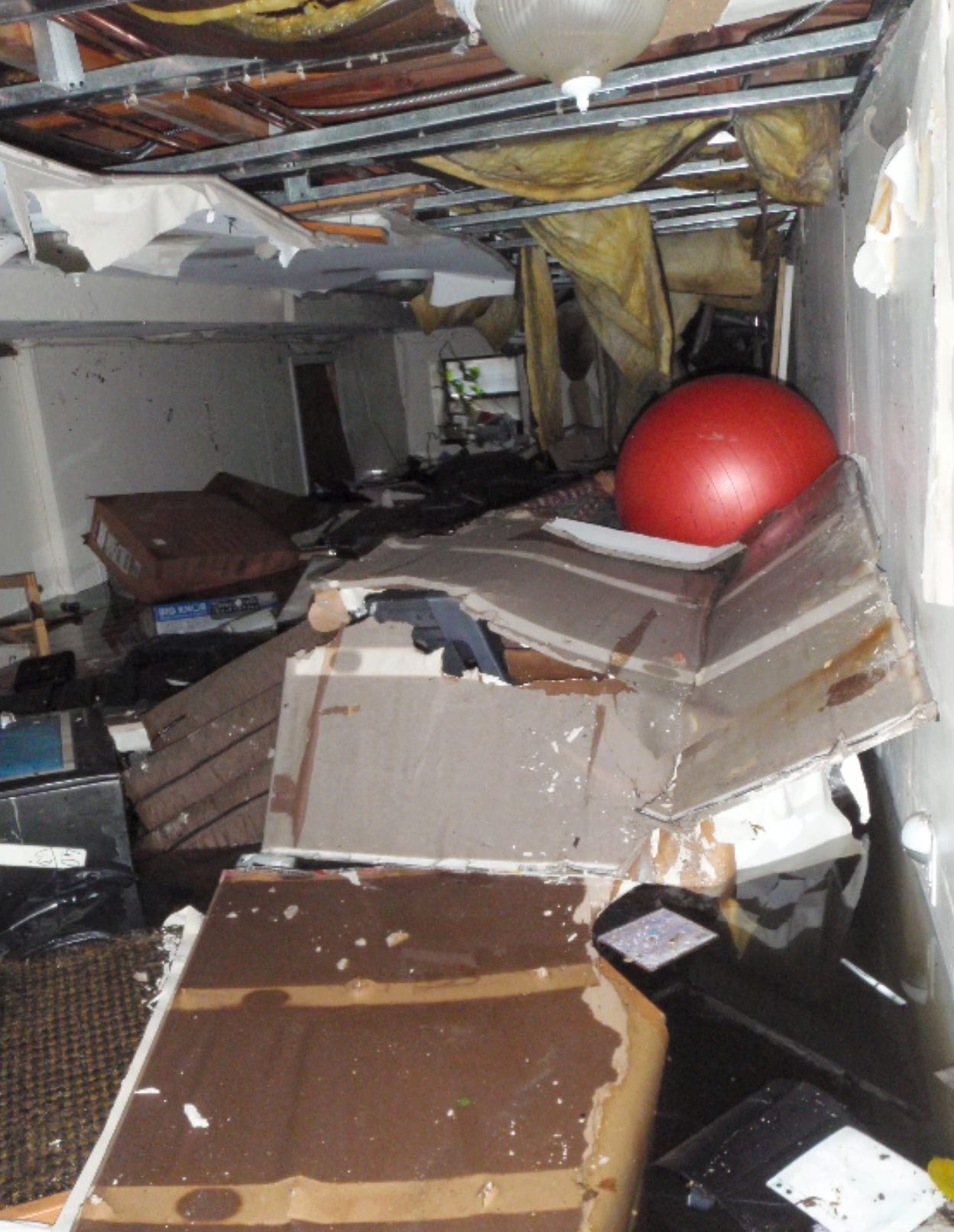
I lived in a duplex in Red Hook, Brooklyn, a block from the water, with the bottom floor at basement level. In a few hours, 12 feet of seawater mixed with sewage flooded over everything I owned.
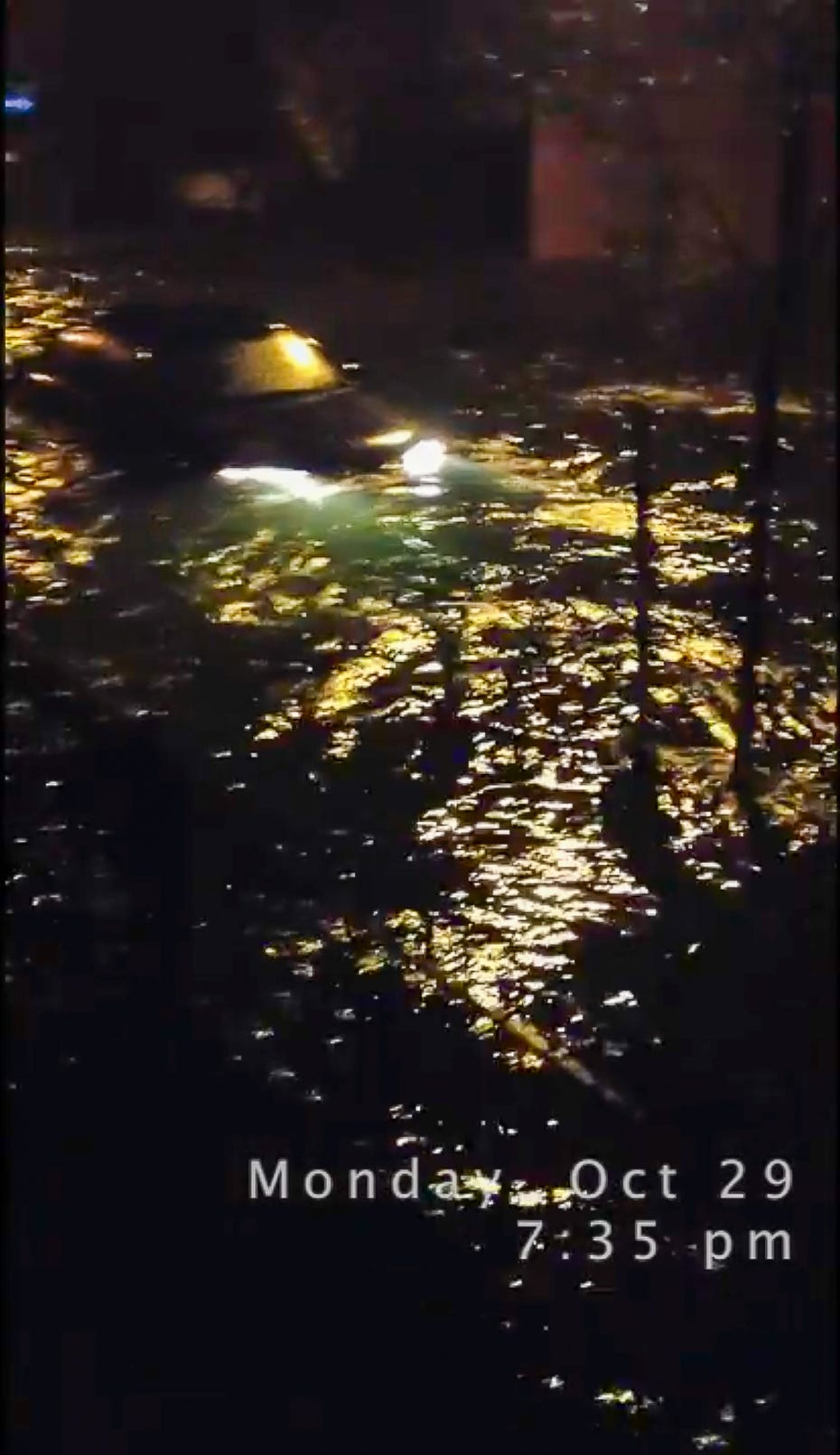
Our shoreline neighborhood had no power or heat for 29 days. You had to climb to the top of our six story building to get cell phone service.
All the features of living in a global metropolis disappeared in a day, turning our neighborhood into a disaster zone. Food and batteries were suddenly hard to find.
And that’s when it hit me.
In the face of nature’s power, none of our cultural skirmishes mattered.
None of our rules, borders, cultures or nationalities. None of our wars.
There is only one global superpower, and it is Earth itself.
Unless we learned to negotiate a truce with our planet, none of us stood a chance — whether we found common ground with one another or kept fighting.
Against the global weather disruptions, no single nation or culture could move the needle. Solving this problem required a shift of approach, a new kind of thinking.
Once again, I was deeply traumatized, but unscathed enough that I could write, think, analyze. Writing became my refuge, my way of channeling all the loss and anger, all the grief and fear.
I made it my mission to translate my realizations into a story that would allow others to feel this enormous shift of perspective without losing everything as I had.
In the murk of Sandy’s aftermath, I began to write — and I haven’t stopped since.
As if to egg me on, the disasters continued.
At this point in history, 14 years after Hurricane Sandy — still considered an anomaly in its day — I would challenge you to find anyone who hasn’t yet had their life derailed in one way or another by nature’s wrath. We expect the disasters now.
Fictional stories serve to whittle down, simplify and amplify, so the real meat of the matter hits you smack between the eyes. Life doesn’t do that so cleanly.
That’s what drama is for, that’s why I write.
So you can have your realization before you lose limb.
Before you know war.
Before everything you cherish is taken away.
I write so you don’t have to see what I’ve seen to learn what I know.
This is what it means to be the lucky bard.
May my stories help you see the path beyond disaster.