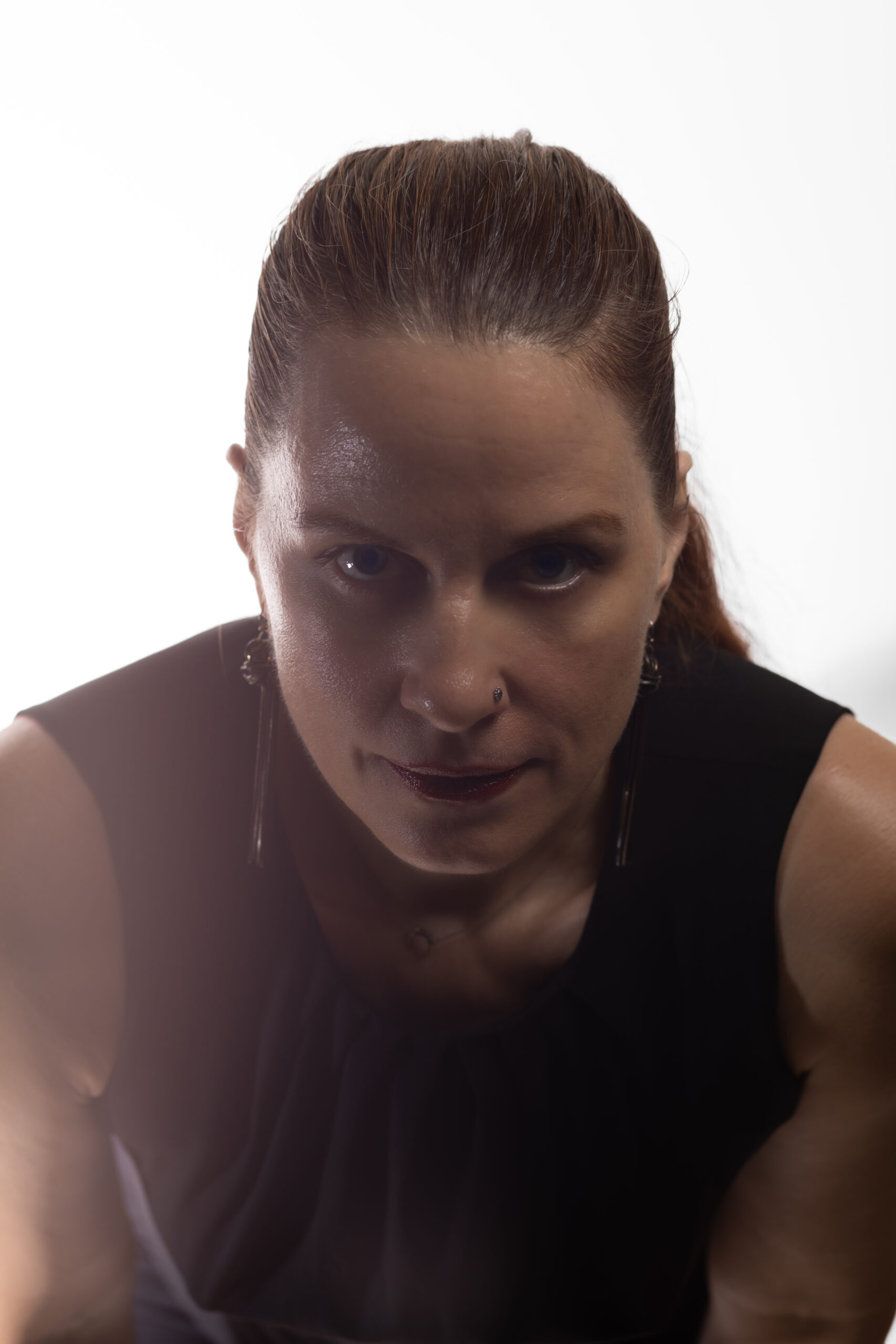
Perplexed by my intense and varied physical pursuits, a friend asked:
“What are you training for?”
My first thought was – well, life, obviously… But then it occurred to me that my life might not be typical.
For one, I live in New York City, which offers a lot in physical endeavors. Tons of walking as part of daily life, because most of us don’t drive, no elevator buildings and — crucially — innumerable opportunities to get physical with fellow dancers, contact improvisers and martial artists all over town. If one wants to get wild with calisthenics, parkour, rollerblading, biking, volleyball… it’s all here in abundance.
Upon a time, I might have answered my friend’s question by listing my goals. I want to hang upside down. Float grown men across my back. Haul lumber from the shop to my place. Dance until my spirit soars.
But what the universe dishes out is always infinitely more fascinating than my goals.
It’s the unexpected plot twists — problems I’ve never solved before — that lead me to breakthroughs, not the predictable repetition of sets and reps, although there is certainly a comfort in those.
What my body likes changes day to day. What she wants to do versus what I envision for myself don’t always jibe. She’s a living creature with her own needs and wants, her ways of communicating — even her own emotions that can get out of step with mine.
I used to be awful at listening to my body.
It’s a skill many of us aren’t encouraged to cultivate. In my younger years, by misfortune of culture and odd teachers, I was conditioned to treat my body as a slave.
I see a parallel to how our civilization relates to the “body” of our planet. “Created for our use” — for us to have “dominion over” — with no consideration for the needs and well-being of the biosphere we depend on for air, water and food. We have no other source. Yet, we maintain this bizarre illusion of separateness from the very thing that gives us life and carries us every minute of every day, just as I once did with my body.
In my youth, training was about obedience, fear, restriction, discipline.
As if my body would choose idleness otherwise. As if she didn’t want to run as fast as she could and climb things all the time.
The messages coming from my teachers were foreboding.
“If you stop to drink water, you’ll get fat,” a dance teacher said.
“Getting punched in the face is the only way you’ll learn to keep your hands up ,” a martial arts trainer mocked.
Sure, fear based training gets you chiseled. Perhaps you’ll even win awards.
But at what cost?
The pre-teen dancers around me were constantly injured. I stopped at thirteen, because, one day, I had trouble getting up off the bench after changing out of my dance clothes. It scared the hell out of me. Body healed of course, I was young.
But that warning wasn’t enough to recalibrate my relationship with her.
So, decades later, my martial arts journey ended abruptly with a deeper injury.
I was training with a “rookie” — a timid math teacher whose weight exceeded mine. We were working on “leg locks”, a technique where you block your partner’s foot from stepping to destabilize them.
Once they stagger, that’s your cue to release the lock and let them fall.
But my training partner didn’t know that yet. He kept his leg wrapped around mine as we fell, together. His full body weight knocked my knee in, until it hit the floor with my lower leg at an unnatural 90 degree angle, a screwed up “proposal” position.
The pop my knee made was so loud, the whole room stopped and turned to us.
“Are you OK?,” Master said.
I stood up on my alien legs.
“I don’t know,” I responded.
It was the first time ever that I couldn’t answer with a simple, reassuring “yes”.
We tested my range of motion. Nothing appeared broken. I could squat and come back up. But my knee felt hella loose, as if my thigh bone could slip past my knee’s ligaments at the slightest turn.
The floor seemed far below me now. I was afraid to move. But I knew I had to.
I didn’t feel much pain — pain I could handle. It was this foreign sense of suddenly being in a different body — halfway out of body — that spooked me.
A chasm of betrayal opened between body and me. She no longer trusted me. And I could no longer rely on her to always save me.
I slathered myself with liniment and walked home from Times Square, across the Manhattan bridge, to my apartment in Brooklyn, a two and a half hour walk with healthy legs. My ordeal took five hours. I don’t know whether this “extreme” approach helped or hurt my recovery.
All I knew at the time was that I could not afford for my knee to “freeze”.
I had to keep it moving, because if I could not walk, I would not survive. My job required me to go all over the city. I was self employed. No medical leave or any other provisions to allow for recovery. My daily movements involved lots of stairs and subway trains. The bike. I lived on a 3rd floor walkup. Bed rest was out of the question. I would have to recover on my feet.
This decision could have led to greater injury. Thankfully, it didn’t. It led to body and I learning to walk again, most literally, together. And this journey of recovery “in motion” changed the way I see and do everything thereafter.
It fostered a deep gratitude for this amazing “meat-suit” I inhabit.
During the seven year healing process, I promised myself I would never again ignore my body’s needs. Of course, keeping that promise proved trickier than I thought.
When my injured knee was so weak that I had no choice but to pay attention, it was easy. But when the signals became subtler as I healed, the old dynamic resurfaced.
The injury had only exaggerated my tyrannical relationship to my body — injured, my slave was even more “subpar” than before.
Our former “functional dysfunction” was now a full blown, divorce worthy, chasm.
Turns out, I never valued my body for the daily miracles she performed. I took her for granted. I expected her to never break, never disappoint. To stay young and gorgeous forever. And if she fell short, I called her “the thing that holds me back”.
I spent the first post injury years grieving over the things I “could no longer do” — while still fiercely pushing towards unrealistic goals that kept re-injuring me. My identity was so tied into being physically strong and agile. As an immigrant freelancer, dependent on a constant stream of hourly income, I felt I could not afford to be any other way. I only felt safe in “superhero mode”.
So, I kept “doing the impossible”, just to reassure myself I could.
Sure — why not learn how to ride a OneWheel with that tender knee?
I was afraid my injury was permanent, so I kept doing hard things in spite of it.
To prove “it wouldn’t define me”.
Unsurprisingly, my body kept buckling under my unreasonable demands.
Because — unlike my mind — she lives in the real world, governed by physics.
She needed rest, so she could heal.
But I — like my bank account balance — saw rest as irrelevant. The fictional “bottom line” was more important than my body’s pain, which I experienced only as a reminder of her inadequacy. My body was no longer the hero, the good slave, who would do anything for her master, no matter how insane. She was “getting old”, and — like my dance and martial arts teachers had predicted — was now tilting into “past her prime”. I would have to make accommodations for her handicaps from here on out — and say goodbye to showing her off as the resilient, invincible workhorse.
So, by the fourth year after my knee injury, I gave up on ever fully healing.
I gained 40lbs.
I hid myself into the writing cave and no longer bothered with makeup or “flattering” outfits. Everything I wore was a “potato sack”. I was resigned to be “interesting only in conversation” and told myself I was “focusing on ergonomics, not looks”.
In retrospect, I recognize this period as grief. Trauma induced depression.
I was mourning what had been “taken from me”, firmly stuck in a rut.
But the less I moved, the more restless my spirit became.
Seeing myself reduced to this defeated self image was a new kind of hell.
Part of me knew this wasn’t “the real me”.
It became clear later that this “knowing part of me” was, of course, my body.
She never gave up on us, even when I did. She knew we could still do “great things”, have fun together and grow. She knew that our best days were ahead, not behind us.
Even when I didn’t, my body knew the difference between injury and “growing pains”.
The trick was convincing my mind. Getting me to see past the mountain of old injuries to the wide and open road hiding just behind them.
But what could shake me out of my deep conviction that I was forever doomed?
It was at this low point that I (re)discovered dance.
I was so humbled by now, I would have been willing to try anything — even looking a weak, silly fool.
This “new” dance I found was not like the dance I knew as a kid.
Counting steps and learning moves. Measuring yourself by how high your leg whips or how many turns you can pirouette.
This dance was different, in the company of people who didn’t watch you — because they were busy in their own process. Some looking like fools themselves, some in trance, some frowning at their lack of inspiration. Some in ecstasy.
And all shades of that were welcome on this dance floor.
A dance practice created specifically to help people find their way back into relationship with their body. To help them em-body who they are and what that feels like at any given moment.
I started small. Just giving myself “permission to just be”. But later, this dance fostered in me an irresistible craving —a creative hunger— felt in my sinews and bones. I couldn’t have stopped dancing if I tried. My body was hooked on the freedom, the release. And with it, my soul had no choice but to tag along.
This dance allowed me to not know how to move — and to move from the place of not knowing. The first practice through which my body could teach me a whole new language of movement, in which our injuries were no longer a limitation, but instead a unique, quirky gift.
My tender knee caused me to move oddly sometimes. But these new patterns showed me how boring my old ways of moving were. And how body and I both dreaded moving “the wrong way”, looking broken, or getting injured again.
When the facilitator asked why I never danced violently, I responded: “I’m afraid I’ll hurt myself, or someone else”. But this barrier didn’t hold for long.
I soon surrendered, allowing the dance to move me rather than choosing “moves”. The violence — rage — flooded out of me, and yes, it did hurt. But not because I was getting physically injured. Physically, it felt quite good. Like a runner’s high. But it wrenched me to feel with such devastating clarity how keeping that rage bottled up had made a cage of me. How the only one getting mangled in the pressure cooker of my forced superhero image was me.
And for whom? The people who taught me that “iron discipline” had long stopped looking. Some were dead. Likely, they were just trying to help me survive anyhow.
None of this was anybody’s fault.
This dance made me re-contextualize vulnerability as the the only resilient strength — the kind that doesn’t shatter, no matter how much pressure you’re under. Because greater pressure, met with greater sensitivity, yields the kind of movement that gets you out of the maze of forces — every time.
So body and I got mad. Cried out our grief. And kept finding more odd and wonderful movement to soothe our aching parts. We got silly. Happy. Weird.
Looking around the dance floor at my fellow journeyers always fills me with gratitude.
Because, without them — awkwardly, vulnerably, forcefully, tenderly, absentmindedly immersed in their own process beside me — I would have not found myself again.
It was through this dance and community that asked nothing of me — except to keep dancing — that I (re)discovered the mind blowing miracle my body had always been. Like our planet, she has endured so much harshness, yet never had any other purpose but to carry our load.
No other creature so dedicated to our happiness exists in the universe.
In our “dance era”, my body no longer lives in fear of tyranny. Mine or anyone else’s. We’ve rebuilt our mutual trust. She knows now, that when something hurts, I’ll listen. I’ll stop, shift my position and let her re-balance the load before something breaks. And in turn, I know that she will mend what is worn when I let her rest.
We know we will always find new ways of moving, together.
We know that nothing is truly out of reach for us, as long as we work with who we are now, rather than what we have lost.
Through our physical pursuits, I experience worlds beyond words.
Highs, trances, surprises, revelations.
A spiritual endurance sets and reps alone can not foster.
Like a kid in a candy store, my body keeps blowing my mind with what she can do now. I see her as living art in the way a meadow, a forest, an ocean is art.
Built into my body is a resilience she shares with our planet. She is not unreasonable in her demands. All it takes is a little consideration.
Like a child, she moves through the world in ways that would never occur to my “grown up” mind. She’s taught me that what we can not understand or predict, we can still feel and move through.
Whatever comes at me — it can “be danced”.
So… I will never know what I’m training for — no more than I can tell you what happens tomorrow.
But I can’t wait to get silly, get weird, get down and —
Dance through it all.
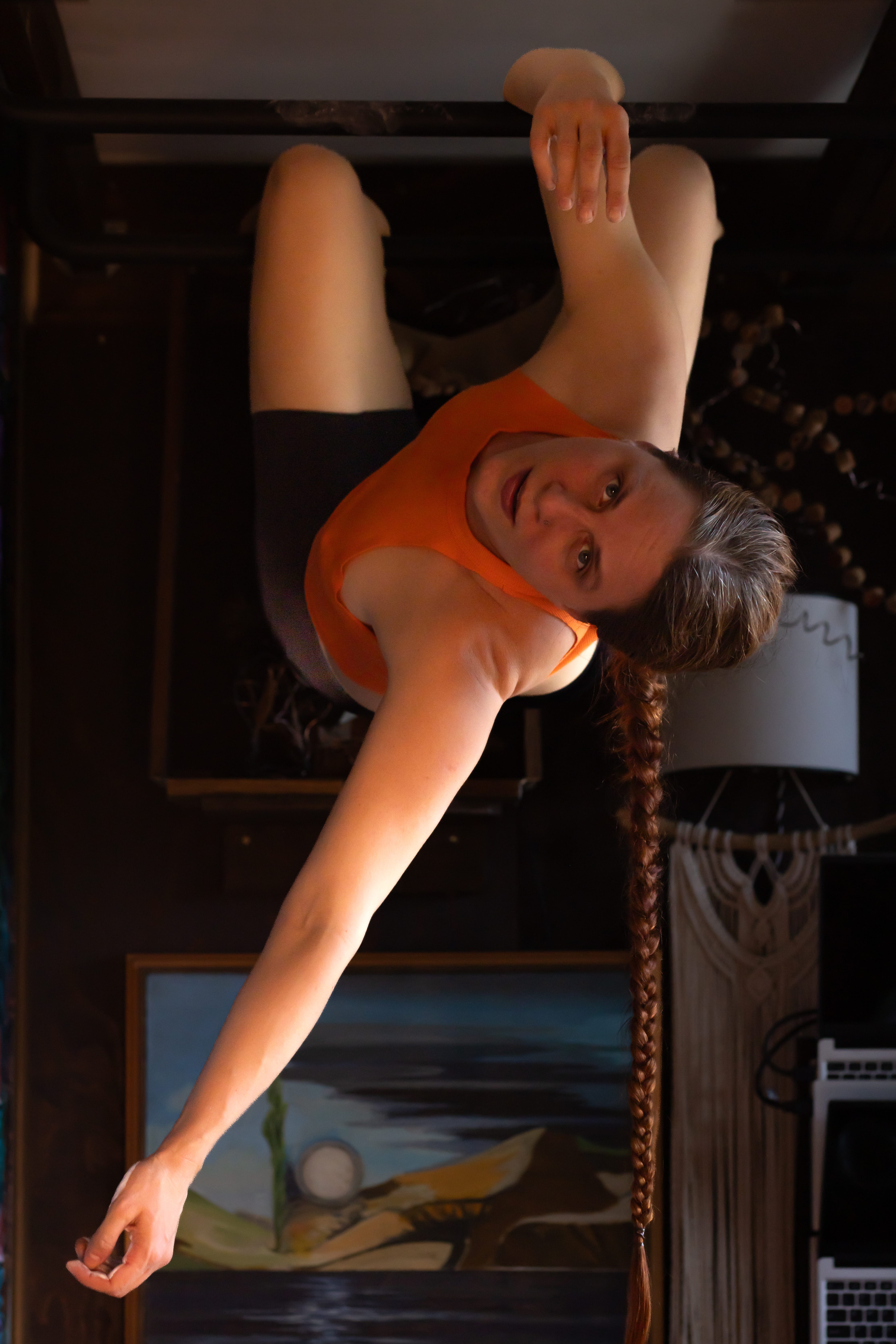
Shout out to my training platforms:
Shout out to “the dance”:
Phographs by: